Sales
Orders carry the product, quantity, price and commitment that purchasing, production and invoicing will use later. The promise to the customer enters once.
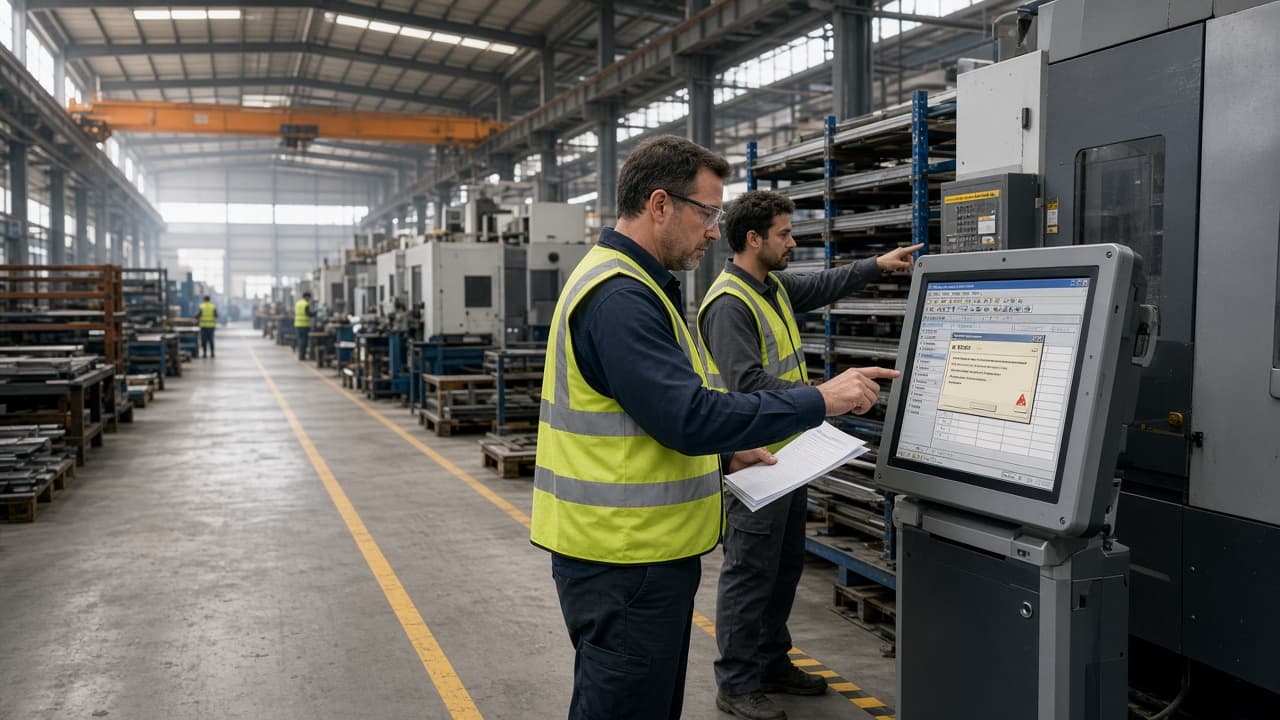
Production & costing
The old ERP was accurate but immovable. Every exception escaped into a spreadsheet until the system of record and the shop floor told different stories. We rebuilt the operation without losing the accounting discipline that made the old system trustworthy.
The situation
The manufacturer trusted its legacy ERP for a good reason: the ledger balanced. Stock, purchasing and cost followed rules people had depended on for years. Replacing it carelessly would trade one kind of pain for something worse — a modern interface nobody could trust.
But the business had changed around it. New products, exceptions and production decisions did not fit the old screens, and every change meant fighting the system. So the real workflow moved into spreadsheets, paper notes and conversations beside the machine.
Now there were two versions of the company. The ERP held the official answer. The shop floor held the current one. Every production question became a reconciliation, and every useful report arrived after someone had rebuilt reality by hand.
The quiet failure
An ERP nobody can change does not remain the system of record. It becomes one more opinion about what happened.
Starting point
The failure was not that the old ERP calculated badly. It was that the operation could no longer express itself inside the model. People created the flexibility they needed outside it, then paid for that flexibility every time information had to be reconciled back into the official record.
How it started
A manufacturing system cannot be designed one department at a time. We traced the same order through sales, purchasing, materials, production, stock and cost, watching where the meaning changed and where somebody had to type the same fact again. That exposed the real system: not the screens, but the chain of decisions underneath them.
We followed materials from demand to purchase, receipt, production, consumption and finished stock. Every handoff where the system lagged behind the floor became visible.
For each operational document, we mapped what it changes: quantity, value, obligation, cost and margin. The goal was not merely to preserve totals, but to preserve why they were true.
Sales, purchasing, production, warehouse and accounting had different words for the same events. We settled those meanings before turning them into data structures or screens.
Prototypes started with corrections, partial receipts, substitutions and period boundaries — the cases generic demos hide and real operations live with.
Architecture
We did not copy the old screens. We preserved the principle that made the old ERP reliable: documents post movements, and balances are calculated from those movements. A receipt changes stock. A production document consumes material and creates finished value. A sale creates both an operational and financial effect. The interface can change with the business because the accounting truth lives underneath it.
What moved in
Each team gets a view shaped around its work, but nobody maintains a private version of the facts. A change made where the work happens becomes the answer everywhere else.
Orders carry the product, quantity, price and commitment that purchasing, production and invoicing will use later. The promise to the customer enters once.
Purchase demand comes from what sales and production actually require. Receipts update the same material record instead of starting another spreadsheet.
Production orders connect planned output to the materials consumed and the finished goods created, including the exceptions that happen on a real floor.
Every receipt, issue, transfer, consumption and completion posts a movement. On-hand quantity is the result of what happened, not a number somebody edits.
Material and production cost flow from the same documents as the physical work, so margin can be explained instead of merely reported.
Operations and finance read the same ledger at different distances: what needs attention now, what the period cost, and where the business is making or losing money.
The difficult part was not replacing screens. It was preserving accounting truth while making the operation easier to change. Stock on hand, unit cost, receivable balance and gross margin cannot become editable columns — columns drift, and once they drift nobody trusts the report. The replacement had to feel flexible to the people doing the work while remaining strict about the movements underneath it.
We rebuilt sales, purchasing, production, stock, costing and reporting around one posting engine. Work is captured in documents people recognise; each document posts explicit movements; every balance is derived. Cost rules live in pure, tested functions, and period snapshots keep the system fast. The business can change the workflow without negotiating with the integrity of the ledger.
Scope
Working principle
The breakthrough is not one feature. It is making every answer come from the same event.
Questions we get asked
The questions below come up in almost every first conversation. If yours is not here, it is a good thing to open with.
Start with the operation
Every engagement starts the same way, whatever the industry: understanding how the work actually happens.
Show us how it works →